Begin with the council record
Order the Tauranga City Council property file and, where it would help, a Land Information Memorandum. A property file may contain plans, consents, inspection notes, certificates and correspondence. A LIM is a report of information the council holds about the property, but it is not a replacement for the full building record.
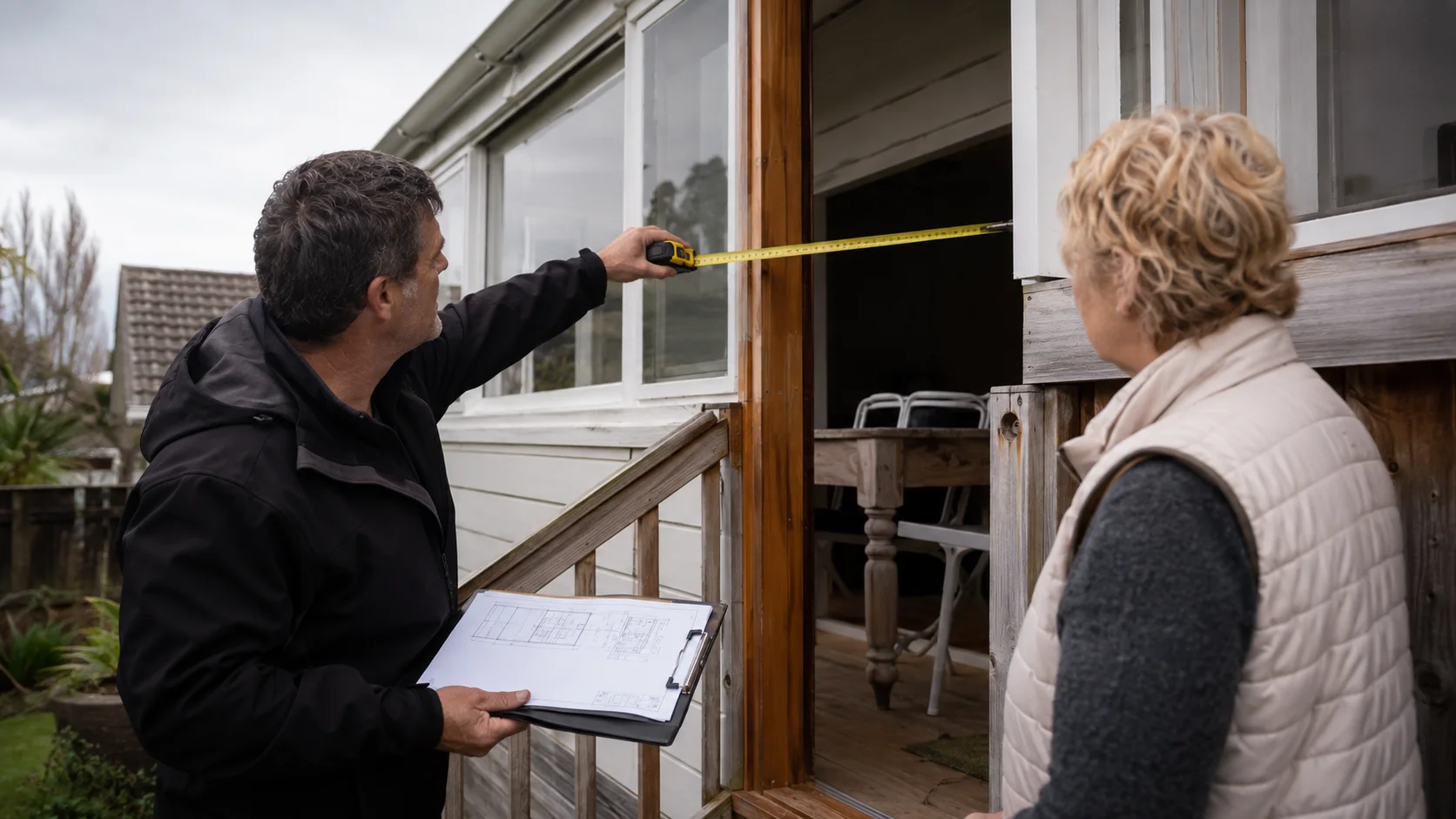
Walk through the home and compare it with the approved plans. Check converted garages, extra bedrooms, decks, retaining walls, plumbing, fireplaces and removed walls. If the work is unclear, ask a suitably qualified building professional to help.
This check supports the wider preparation in our guide to property documents and disclosure. Buyer questions are easier to answer when records, advice and known gaps are together.
Not every alteration needs consent
Some low-risk work is exempt, but exempt work must still meet the Building Code. The Ministry of Business, Innovation and Employment provides official guidance on work that can be done without building consent, including the conditions and limits attached to each exemption.
The date matters. Establish whether consent was required when the work was done; do not assume a newer exemption changes the status of earlier work. Also separate building consent from resource consent, planning rules, plumbing or electrical certification and cross-lease or body-corporate approval. One record does not answer every approval question.
What a Certificate of Acceptance actually tells you
A Certificate of Acceptance, commonly called a COA, gives limited assurance about completed work that was carried out without the required building consent. It is not the same as a Code Compliance Certificate because council inspectors did not see every stage of construction. Building Performance explains the statutory limits of a COA.
The certificate covers only the parts the council can assess. Closed-in work can make that difficult, so a COA is not guaranteed.
When a Tauranga owner can apply
Tauranga City Council says a COA may be available where work was completed without consent, or where approved work was changed and completed without the required inspections or verification. If the work has started but is not finished, speak with the council before continuing so it can identify a pathway.
A COA cannot be issued for work completed before 1 July 1992. For older work, the council says an owner may provide a third-party report for the property file. That can give a future buyer useful information, but it is not council approval.
Build an evidence pack
The applicant has to show how the completed work complies. Tauranga City Council may ask for drawings, photographs, certificates, producer statements, specialist reports, details of who did the work and evidence about anything that can no longer be inspected. Closed-in foundations, framing, waterproofing or fire systems may be difficult to verify after completion.
Evidence to start gathering
- The property file and any relevant LIM.
- Plans, invoices and dated construction photographs.
- Records from builders, designers and engineers.
- Certificates, producer statements and specialist reports.
- Evidence about who completed or supervised the work.
Choose the remedy before you set a sale date
- Confirm the records. Establish what was approved, inspected and completed.
- Confirm which rules applied. Work from the date and nature of the alteration, not how it looks today.
- Document genuinely exempt work. Useful records can explain the difference between the plans and the house, although filing them does not amount to council approval.
- Ask whether a COA is possible. Get council and professional guidance before paying for an application or opening up finished work.
- Complete consented remedial work. This may be necessary where compliance cannot otherwise be shown.
- Remove or reverse the alteration. In some cases that is clearer and more economical than retaining it.
- Prepare an accurate disclosure pack. Give your lawyer and agent the facts, records and reports before marketing begins.
A COA application can lead to more than an approval. Tauranga City Council says it may exclude work it cannot verify, refuse the application, issue a Notice to Fix or require removal or further consented work. Ask what evidence is realistic before making the sale timeline depend on a particular outcome.
Allow time in your Tauranga selling plan. Council enquiries, reports and remedies can affect the launch date.
You can still sell, but buyers need the facts
Unconsented work does not automatically prevent a sale. It can, however, influence a buyer's confidence, conditions, finance and insurance. A buyer may also ask for work to be remedied before settlement, so your lawyer should make sure the agreement records exactly what each party has accepted.
Tell your lawyer and agent early. Avoid describing the property as fully consented, council approved or compliant unless the evidence proves it. Give buyers enough time and information to take their own council, building, legal, lending and insurance advice.
Turn the issue into a plan
Record the evidence, advice and next action before marketing.
Add council records, professional reports and any remedy work to your private preparation checklist. Then ask an agent how the issue may affect buyer questions and campaign timing.
Frequently asked questions
Is a Certificate of Acceptance retrospective consent?
No. It is limited assurance about the parts of completed work Council can assess. It is not the same as a building consent followed by inspections and a Code Compliance Certificate.
Can a builder’s report approve unconsented work?
No. A qualified report can provide useful evidence and may be placed on the property file, but it does not itself create Council approval or a COA.
What if the work was done by a previous owner?
Current owners can still need to investigate and remedy the records. Gather the purchase documents and anything the previous owner supplied, then speak with Council and your lawyer about the available path.
Should I apply for a COA before talking to Council?
No. Check the property file and discuss the actual work first. A COA may not be available or may not be the best route, and the evidence burden sits with the applicant.
Will a COA guarantee buyers can obtain finance or insurance?
No. Lenders and insurers apply their own criteria. Give them the complete records and ask for written confirmation relevant to the property and proposed transaction.
Official sources
Reviewed 21 August 2026. Council decisions depend on the actual work, its date and the evidence available. Use Tauranga City Council, your lawyer and appropriately qualified building professionals.
Keep the public guide
Share the article or save a private PDF.
No account is needed to read or share this guide. A private seller account is only needed to create its personalised A4 PDF.
Optional seller account
Take the useful work to another device.
Sign in to access the planning information saved to your account on another device and save personalised guide PDFs. Your saved plan and calculator results are not included in introduction requests.