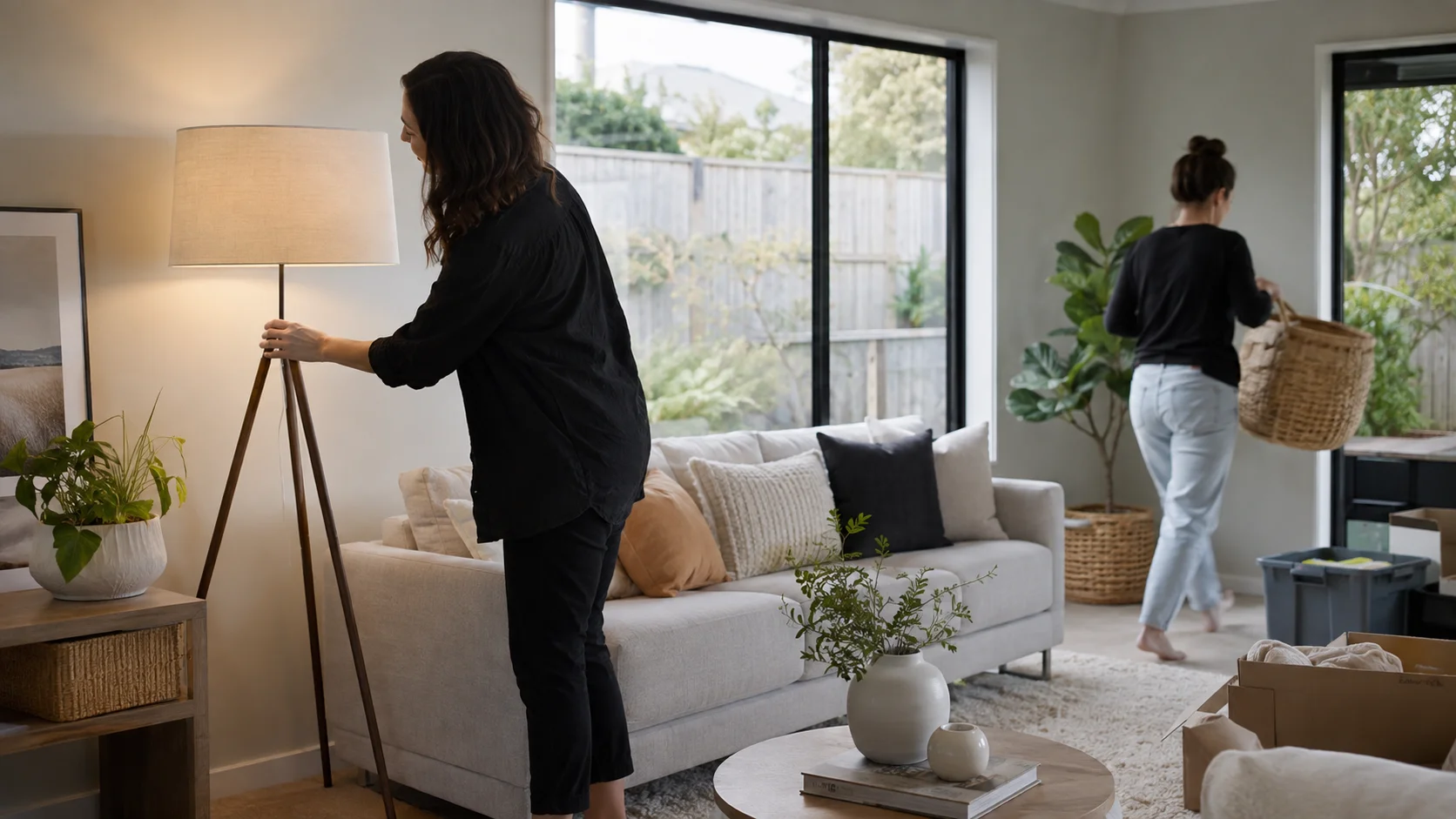
What is home staging meant to do?
Staging helps buyers read a home. A correctly sized table can show that a dining area works, while a bed gives an empty bedroom scale and purpose. It should make the layout easier to understand, not disguise the property.
There is an emotional side too. A calm entrance, balanced living room and inviting outdoor area can help a buyer picture everyday life there. Our guide to financial value and emotional buyer appeal explains the distinction. Staging improves presentation, but it does not change the land, floor area or condition.
When might staging earn its place?
Full staging can be useful when a home is empty, the existing furniture overwhelms the rooms, or an unusual open-plan space needs explaining. Partial staging may suit an occupied home that already has the basics but needs a clearer layout, better lighting or a few well-chosen pieces.
A consultation can be enough when the budget is tight. You might receive a room-by-room plan for removing surplus furniture and preparing the spaces that matter most for photography and open homes. Settled's seller preparation guidance puts cleaning, decluttering, repairs and presentation before marketing. If those fundamentals are unfinished, deal with them before hiring furniture.
How should you set a Tauranga staging budget?
There is no single reliable going rate. The quote depends on the rooms included, hire period, furniture level, access, delivery and whether the home is occupied. Ask two or three Tauranga providers to price the same written brief so you can compare like with like without pretending the cheapest package is automatically the best fit.
- Confirm whether the quote includes GST, delivery, installation, collection and insurance.
- Ask what happens if the campaign runs beyond the initial hire period.
- Separate optional outdoor areas, artwork and extra rooms from the core package.
- Get the cancellation, damage, access and early-removal terms in writing.
Check who bears the cost if an item is damaged, who can move staged furniture and how quickly the provider can collect it after an early sale or withdrawn campaign. If the property is tenanted, agree access and use of the tenant's possessions before accepting a staging programme.
Put the figure beside cleaning, repair and photography budgets rather than treating staging as a stand-alone decision. The best use of the next dollar may be fixing a visible maintenance issue, especially if staging would only make the same issue more obvious.
Make an occupied home repeatable
An occupied home has to return to viewing condition without exhausting everyone who lives there. Choose a small reset for benches, beds, bathrooms, bins, pets, vehicles and personal papers. Give everyday items a real storage place instead of shifting clutter from room to room before every appointment.
Settled says a seller and agent need the tenant's permission for photography, open homes or viewings and before including a tenant's possessions in marketing photos. Staging does not remove those rights. Record the agreed access and presentation plan, including who resets the home and what happens if a booking changes.
How do you decide if it is worthwhile?
Name the problem first. Empty rooms may need scale. Crowded rooms may only need editing. A home that already feels coherent and photographs well may gain little from a full installation.
Ask your agent which buyers the campaign is aimed at and which rooms will carry the story. Then compare full staging with partial staging, a consultation and careful DIY preparation. Use photography, enquiry, viewing numbers and buyer feedback to judge the campaign, but do not accept a promise that the staging bill will automatically return as extra sale price.
What should staging never hide?
Presentation still has to be accurate. The Real Estate Authority's marketing and advertising guidance says property claims need a reasonable basis when they are made. Staging should not conceal damage, suggest an unapproved use for a room or make a fixed feature appear different from reality.
If furniture or a finish has been added digitally, label the image so a buyer can distinguish the concept from the current property. Review the final photographs, floor plan and chattels list before launch. Photograph the installed staging for your own condition record, but do not allow hired items to appear as included chattels unless that has actually been agreed.
Plan before hiring
Put staging beside the other preparation jobs.
Compare its cost and likely buyer benefit with cleaning, repairs, photography and outdoor presentation. Then decide which work deserves the budget.
Frequently asked questions
Does every room need to be staged?
No. The living area, dining space, main bedroom and important outdoor area often carry most of the story. A targeted stage may be enough if secondary rooms already have a clear purpose.
Can I stage the home myself?
Yes. Cleaning, decluttering, reducing furniture and improving room flow can help. A paid consultation can provide a practical plan without hiring a full house of furniture.
Will staging increase the sale price?
It may improve presentation, buyer understanding and emotional appeal, but no one can promise a specific price increase. The result also depends on demand, pricing, condition and campaign quality.
Official sources
Reviewed 21 August 2026. Staging quotes and hire terms can change, so confirm the complete cost and responsibilities in writing.
Keep the public guide
Share the article or save a private PDF.
No account is needed to read or share this guide. A private seller account is only needed to create its personalised A4 PDF.
Optional seller account
Take the useful work to another device.
Sign in to access the planning information saved to your account on another device and save personalised guide PDFs. Your saved plan and calculator results are not included in introduction requests.