Start with the agreement, not assumptions
The Real Estate Authority (REA) defines chattels as moveable and removable items of personal property. The stove, carpets, blinds, curtains and light fittings are familiar examples, but an item is not safely included just because most homes have one. The chattels written into your sale and purchase agreement are the ones the buyer can expect to receive.
The line between a chattel and a fixture can be legally important. Something screwed down, wired in or built into the house may not be as simple as “I bought it, so I can take it”. Ask your lawyer about anything unusual, valuable or difficult to remove before the agreement is signed.
A sale and purchase agreement is legally binding. REA's guidance tells agents to record clearly when a seller plans to remove something a buyer could consider a fixture, such as a dishwasher or waste-disposal unit. Resolve that question while the agreement can still describe the answer.
Make the list match your Tauranga home
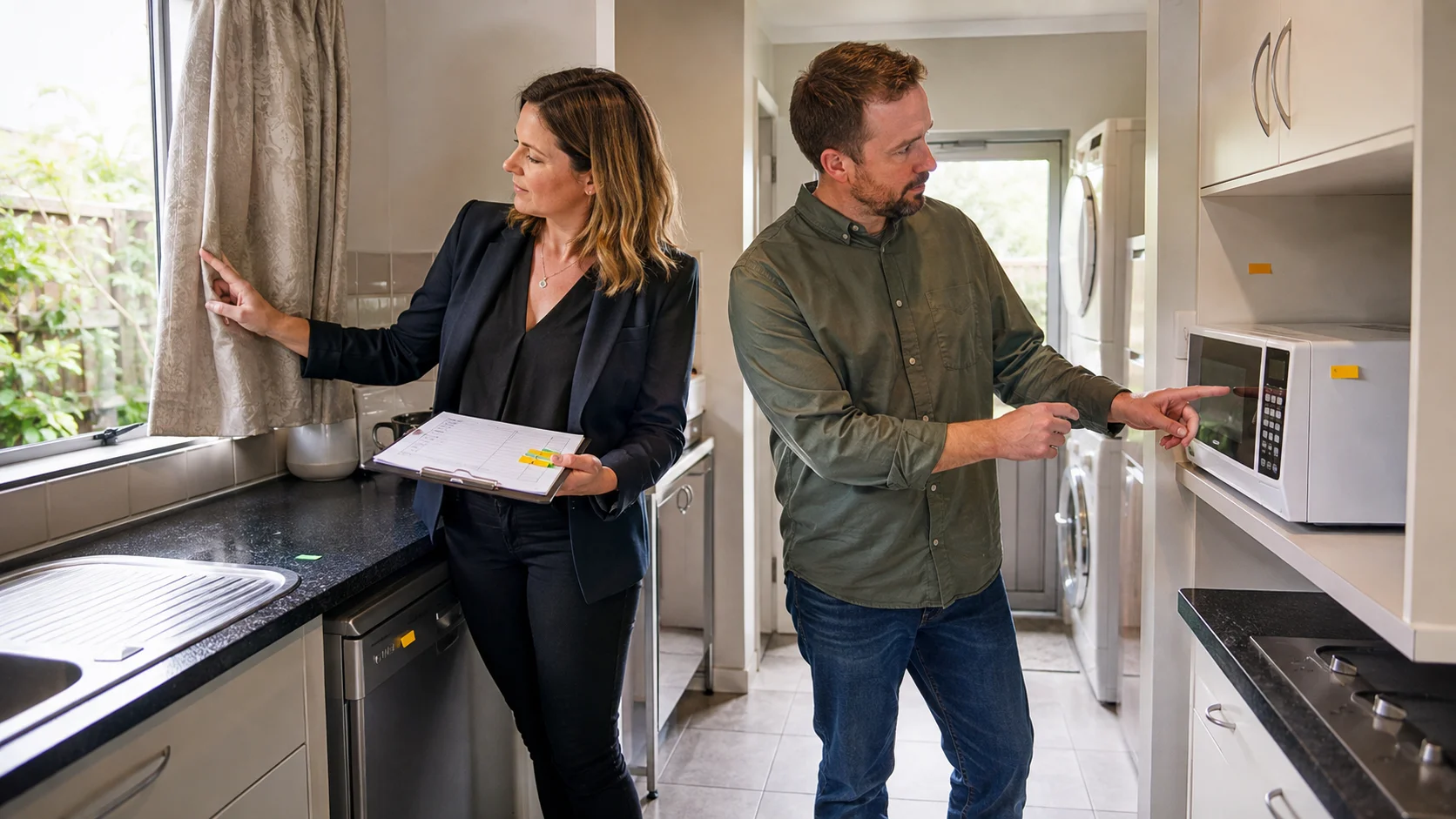
Agreement forms include common items, but a pre-filled schedule will not capture every property. Walk through your home room by room and name what is actually there. REA's agreement guide explains that the agreement records the chattels being sold with the property.
Use plain descriptions that another person can follow. Photograph unusual inclusions, note the room and quantity, and distinguish a built-in item from nearby movable accessories. This working inventory helps your agent and lawyer prepare the formal schedule; it does not replace the agreement.
Walk through these areas
- Kitchen: oven, hob, rangehood, dishwasher, waste disposal, fridge or other freestanding whiteware.
- Windows and lighting: curtains, blinds, tracks, rods, light fittings and removable shades.
- Heating and ventilation: heat pumps, heaters, HRV-style systems, controllers and remotes.
- Security and access: alarms, cameras, doorbells, smart locks, garage-door motors, remotes and keys.
- Outdoor: sheds, irrigation controllers, water tanks, clotheslines, spa pools, robot mowers and play equipment.
- Energy and transport: solar equipment, batteries and EV charging hardware.
- Connected home: hubs, bridges, thermostats, speakers, switches and setup codes.
Separate must-stay items from optional extras
Your agreement determines what must remain. Optional extras can be negotiated, perhaps a fridge that fits a difficult recess, outdoor furniture made for the deck, spare flooring, a mower or a spa pool. An inclusion may be useful to the buyer, but that does not mean it adds its retail price to the property's value.
Before offering an extra, check that it works, the buyer wants it and you can hand it over cleanly. Leased, financed or subscription-linked equipment needs particular care because you may not own it outright or be able to transfer the service.
Remove special items before marketing
Settled advises sellers to remove or replace a chattel they do not want to sell before marketing, such as a favourite lightshade. Buyers then see the house as it will be sold. If early removal is impractical, make the exclusion obvious and keep the advertising and agreement consistent.
Write down the handover details
Use the quantity, location, make or model where confusion is possible. Match each included item with its keys, remotes, chargers, manuals and codes. For a fuller handover, the home operations book guide shows how to organise instructions without giving away personal information.
REA's seller settlement checklist tells sellers to make sure chattels such as appliances are working. Its agreement guide says the buyer's pre-settlement inspection checks that the property and chattels remain in the same condition as when the agreement was signed.
Your agreement may contain more specific promises. Test included items before settlement, keep a record of any agreed repair, and tell your agent and lawyer promptly if something fails or is damaged rather than trying to improvise a replacement with the buyer.
Treat smart-home gear as a package
A buyer may want the wired switches, thermostat, doorbell and hub but not your personal speakers or cameras. List the hardware that stays, the accessories needed to run it, and any subscription that is excluded. Use the smart-home handover guide to plan resets and ownership transfers, and never give a buyer your personal account password.
Prepare before the agreement
Build the list while you can still test every item.
Walk through the house with your agent, mark inclusions and exclusions, and give the final schedule to your lawyer for review.
Frequently asked questions
Can I take a light fitting after the property is marketed?
Do not assume so. Replace or remove a treasured fitting before marketing where practical. If it remains visible, make the exclusion clear and have the agreement reviewed.
Should I leave spare paint, tiles or flooring?
They can be useful to the buyer if safely stored and clearly labelled. Agree what stays; do not leave unwanted chemicals, rubbish or unidentified materials.
What if a listed appliance stops working?
Tell your agent and lawyer promptly. The agreement may require listed chattels to be in working order or in the same condition at settlement.
Official sources
Reviewed 21 August 2026. The agreement and legal character of an item determine the outcome. Obtain legal advice before signing.
Keep the public guide
Share the article or save a private PDF.
No account is needed to read or share this guide. A private seller account is only needed to create its personalised A4 PDF.
Optional seller account
Take the useful work to another device.
Sign in to access the planning information saved to your account on another device and save personalised guide PDFs. Your saved plan and calculator results are not included in introduction requests.