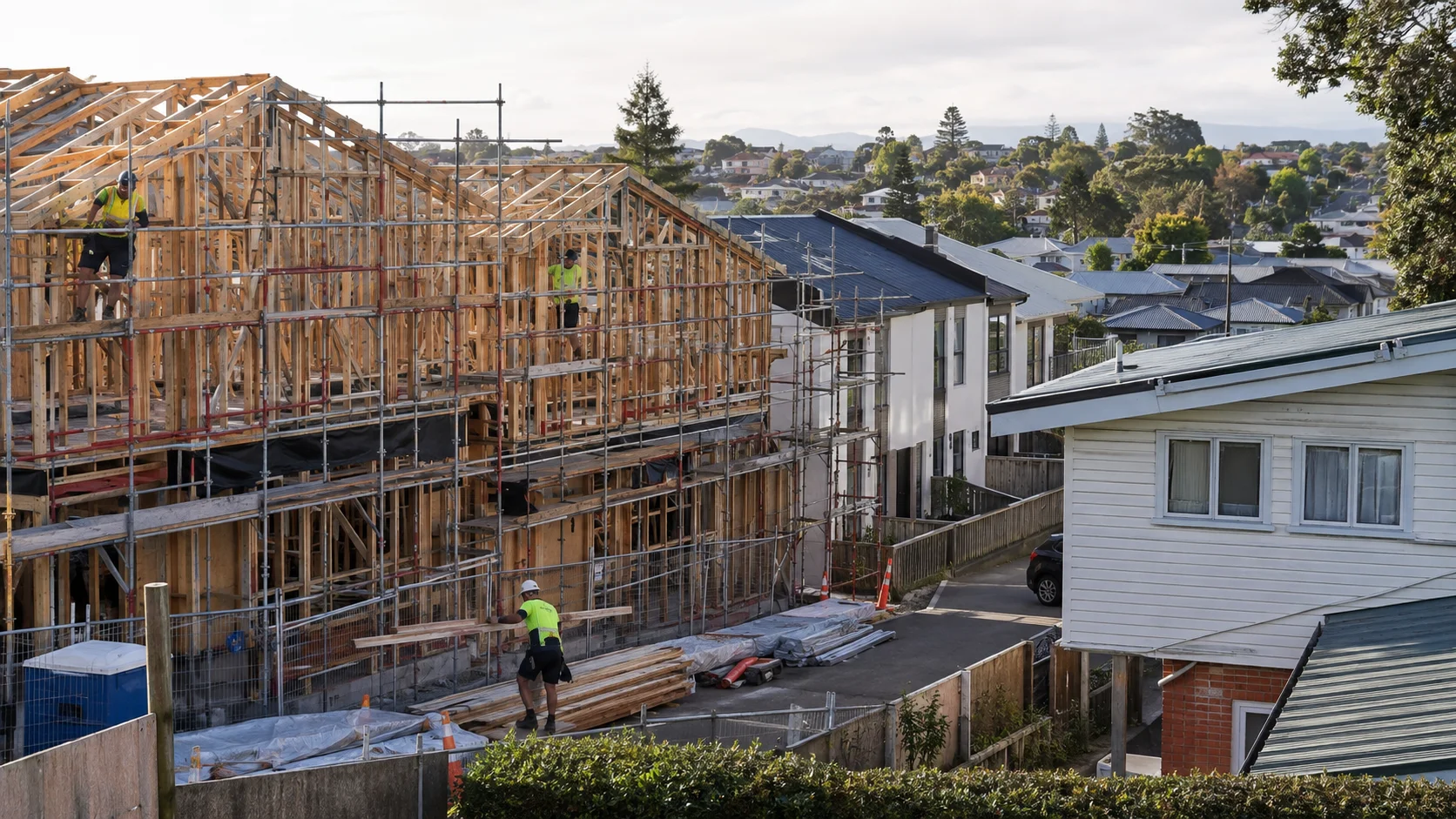
What do the latest Tauranga housing figures show?
The 2025 SmartGrowth Development Trends Report recorded 437 new dwellings consented in Tauranga City in the year to June 2025. That was 13% fewer than the 500 dwellings consented in the previous year.
Activity did not remain at one pace. Council's six-month update recorded 337 new dwellings from July to December 2025, compared with 247 in the equivalent earlier period. The July 2026 building consent report then recorded 28 proposed dwelling units across 24 residential consents for that month.
A consent is not a completed home
A building consent confirms that proposed work has been approved against the applicable building requirements. It does not show that work has started, how quickly it will proceed or whether the design will be completed unchanged.
Construction is the next stage. Timing can be affected by finance, presales, materials, contractors, infrastructure and the developer's decisions. A larger consent pipeline can therefore take time to become visible housing supply.
When work is complete, the owner applies for a code compliance certificate. Occupation and a later resale are separate again. Treating all consented units as homes already available to buyers would overstate current supply.
How does a proposed home reach occupation?
Each stage answers a different question, and projects do not all move through the pipeline on the same schedule.
- Planning and infrastructureIs the location enabled for the proposed development?
- Building consentHas the proposed work been approved?
- ConstructionHas work started and continued?
- CompletionIs the finished work documented and compliant?
- OccupationIs the dwelling available and being used as a home?
What types of homes are being approved?
Stand-alone dwellings remained the largest group in Tauranga City during 2025. The SmartGrowth report counted 258, equal to 59% of the city's consented dwellings.
Duplexes accounted for 45 dwellings, or 10%. Attached dwellings accounted for a further 91, or 21%. Together, duplex and attached homes made up 31% of the annual total.
The mix has changed over time. SmartGrowth reported that attached dwellings, including duplexes and townhouses, increased from 10% of Tauranga consents in 2020 to 31% in 2025. This gives buyers more alternatives to a conventional stand-alone house.
Dwelling type matters when considering competition. A new townhouse with a compact section can appeal to a different buyer from a larger established home, while some buyers will compare both because their location or price overlaps.
Where is Tauranga's growth being planned?
During 2025, 43% of Tauranga City's dwelling consents were in existing urban or intensification areas. The SmartGrowth report identified the Tauranga infill area as 27% of the city total, behind Wairākei at 30%.
Growth areas and existing neighbourhoods therefore contribute different forms of supply. Greenfield areas can add new streets and stand-alone homes, while infill and intensification can place duplexes, townhouses or apartments closer to established services.
Population growth changes the supply question
A city can consent more homes and still experience housing pressure if the number of households grows faster. Population alone is not enough because people share homes in households of different sizes.
Housing demand also changes with age, migration and household type. A growing family, a single-person household and an older couple seeking a smaller home may add very different demand for bedrooms, access, land and location.
Compare supply and population over several years rather than dividing one annual population estimate by one annual consent total. Consents are proposed additions, while population estimates and household information are revised on their own schedules.
What can sellers learn from the construction pipeline?
New supply matters most when it overlaps with the likely buyers for your property. Compare nearby new developments by dwelling type, completion stage, pricing evidence and buyer appeal, then place that information beside relevant settled sales and current campaign response.
Common questions about Tauranga building figures
How many new Tauranga homes were consented in 2025?
Tauranga City consented 437 new dwellings in the year to June 2025, according to the SmartGrowth Development Trends Report. That was 13% fewer than the 500 consented in the previous year.
Does a building consent mean a home will definitely be completed?
No. A consent approves proposed building work. Construction may start later, change or not proceed, and a separate code compliance process applies after work is completed.
What types of homes are being approved in Tauranga?
Stand-alone homes were 59% of Tauranga City's 2025 consents. Duplex and attached dwellings together accounted for 31%, showing that a substantial part of the pipeline is medium-density housing.
Sources and definitions
Reviewed 5 September 2026. Annual Tauranga City figures cover the year to June 2025. The six-month comparison covers July to December 2025. The monthly report covers July 2026. Every figure refers to building consents rather than completed or occupied homes.
Read the wider market
Place new housing beside the other Tauranga signals.
The current market update connects value movement, proposed supply and the evidence that matters for an individual sale.
Keep the public guide
Share the article or save a private PDF.
No account is needed to read or share this guide. A private seller account is only needed to create its personalised A4 PDF.
Optional seller account
Take the useful work to another device.
Sign in to access the planning information saved to your account on another device and save personalised guide PDFs. Your saved plan and calculator results are not included in introduction requests.